Florida's Caregiver Crisis by the Numbers
Florida is ground zero for the caregiver shortage in the United States, and the numbers tell the story:
- 4.5 million residents aged 60+ (the largest senior population of any state)
- 1 in 5 Floridians will be over 65 by 2030
- Projected shortfall of 60,000+ home health aides by 2030
- 65%+ annual turnover in the home care industry statewide
- 23% growth in demand for home care services expected over the next decade
Understanding why the shortage exists and what you can do about it is no longer optional — it's a survival strategy.
What's Driving the Shortage
The Aging Population Boom
Florida attracts retirees from across the country. The state adds an estimated 900 new residents aged 60+ every single day. This isn't slowing down — it's accelerating. By 2030, the state's senior population will exceed 6 million.Low Wages Relative to Cost of Living
The median hourly wage for a home health aide in Florida is approximately $14.50/hr. In South Florida, where rent averages $2,200+/month, this wage doesn't go far. Many caregivers work 2–3 jobs or leave the profession entirely for retail or hospitality positions that pay comparably with less physical and emotional demand.Burnout and Turnover
Caregiving is physically and emotionally demanding. Without adequate support, reasonable caseloads, and competitive compensation, burnout is inevitable. The industry's 65%+ turnover rate means agencies spend as much time replacing staff as retaining them.Training and Certification Barriers
Becoming a certified HHA or CNA requires completing a training program (75–120+ hours), passing an exam, and undergoing background screening. While not excessive, these requirements create a barrier for entry — especially for individuals who can't afford to go without income during training.Competition from Facilities
Hospitals, nursing homes, and assisted living facilities compete for the same caregiver pool. Facilities often offer benefits (health insurance, PTO, retirement) that most home care agencies can't match, pulling caregivers away from home-based care.The Impact on Home Care Agencies
Unfilled Shifts and Lost Revenue
Every unfilled shift is lost revenue. If your agency bills $25–$35/hr for caregiver services and you have 10 unfilled shifts per week, that's $1,000–$1,400 in weekly lost revenue — over $50,000 annually.Client Dissatisfaction and Attrition
Clients who experience inconsistent care — missed visits, rotating caregivers, schedule changes — lose trust and switch agencies. In a competitive market like South Florida, there's always another agency willing to take your client.Staff Burnout Cascade
When shifts go unfilled, existing caregivers are asked to take on extra hours. This leads to overtime costs, burnout, and eventually more turnover — creating a vicious cycle that's difficult to break.Actionable Solutions for Your Agency
1. Proactive Recruiting Over Reactive Hiring
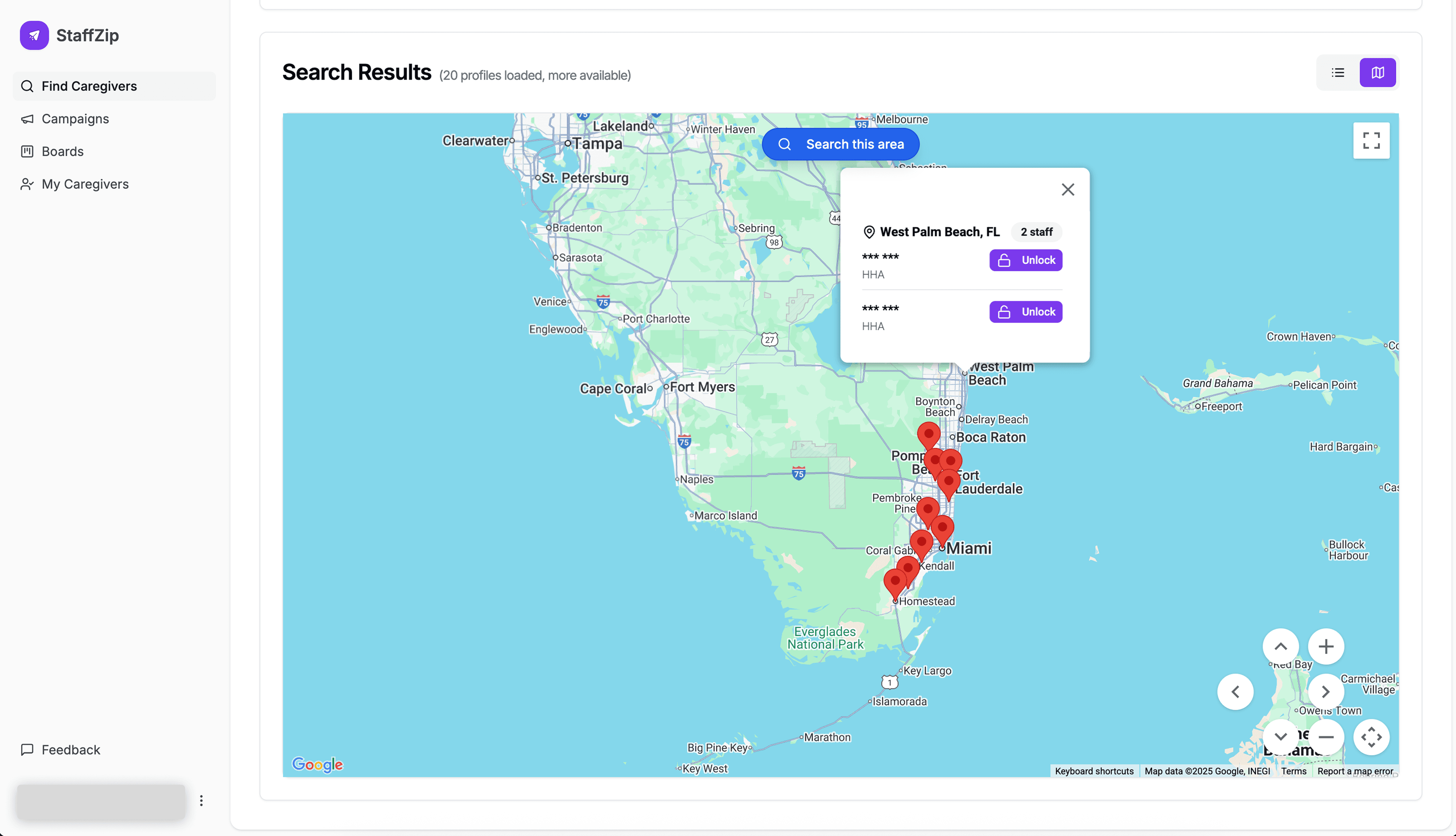
Stop waiting for open positions to start recruiting. Build and maintain a pipeline of qualified caregivers you can activate at any time. This means having access to a database of verified caregivers — like the 2,500+ in CaregiverHire's database — and reaching out regularly.2. Speed Up Your Hiring Process
The agencies that hire fastest win. If your process takes 3–4 weeks from application to first shift, you're losing candidates to faster competitors. Target a 1-week hiring cycle:3. Use Technology to Scale Outreach
You can't personally call 100 caregivers a day. But you can send an SMS campaign to 100 caregivers in 5 minutes. Technology levels the playing field, allowing smaller agencies to compete with larger operations.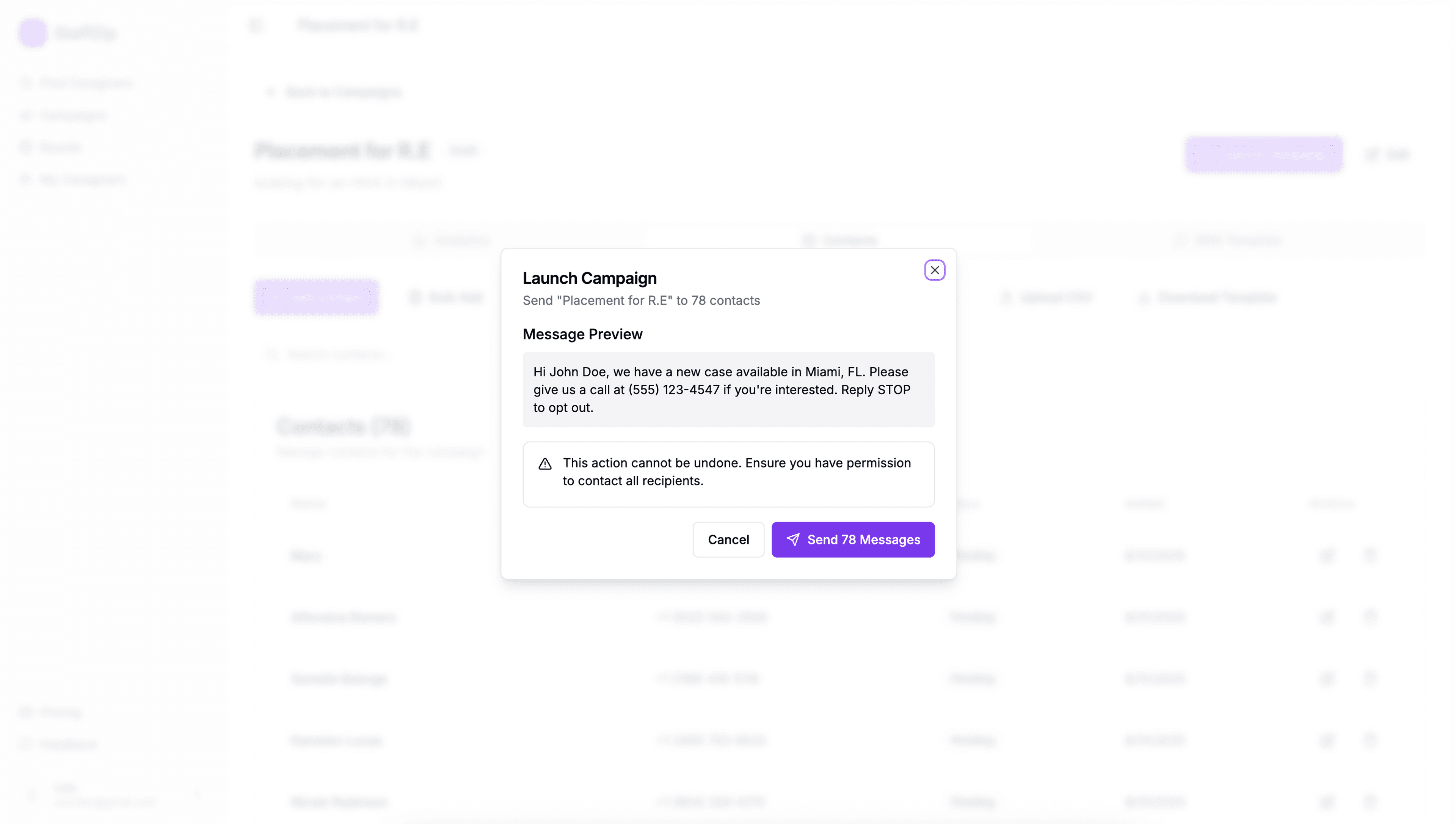
4. Improve Retention
Recruiting is only half the equation. Reducing turnover saves more money than any recruitment campaign. Focus on:- Competitive pay — even $1–$2/hr above market rate significantly reduces turnover
- Consistent scheduling — caregivers value predictability
- Recognition and appreciation — small gestures (gift cards, shout-outs, birthday messages) build loyalty
- Open communication — caregivers who feel heard stay longer
5. Diversify Your Sourcing Channels
Don't rely on a single source. The most resilient agencies use a combination of:- SMS outreach to verified caregiver databases
- Employee referral programs
- Community partnerships with training programs
- Targeted social media ads
- Job boards (as a supplement, not primary strategy)
The Opportunity in the Crisis
The caregiver shortage is a problem — but it's also an opportunity for agencies willing to adapt. While your competitors are still posting on job boards and waiting, you can be texting qualified caregivers directly and filling shifts in hours.
The agencies that invest in modern recruiting tools and proactive outreach will thrive. Those that don't will struggle to keep up with demand.
Take Action Now
CaregiverHire gives you instant access to 2,500+ verified caregivers in South Florida. Search by location, certification, and availability. Send SMS campaigns directly from the platform. Your first campaign is free.